
Friday, July 22, 2005

Sometimes it's all worthwhile


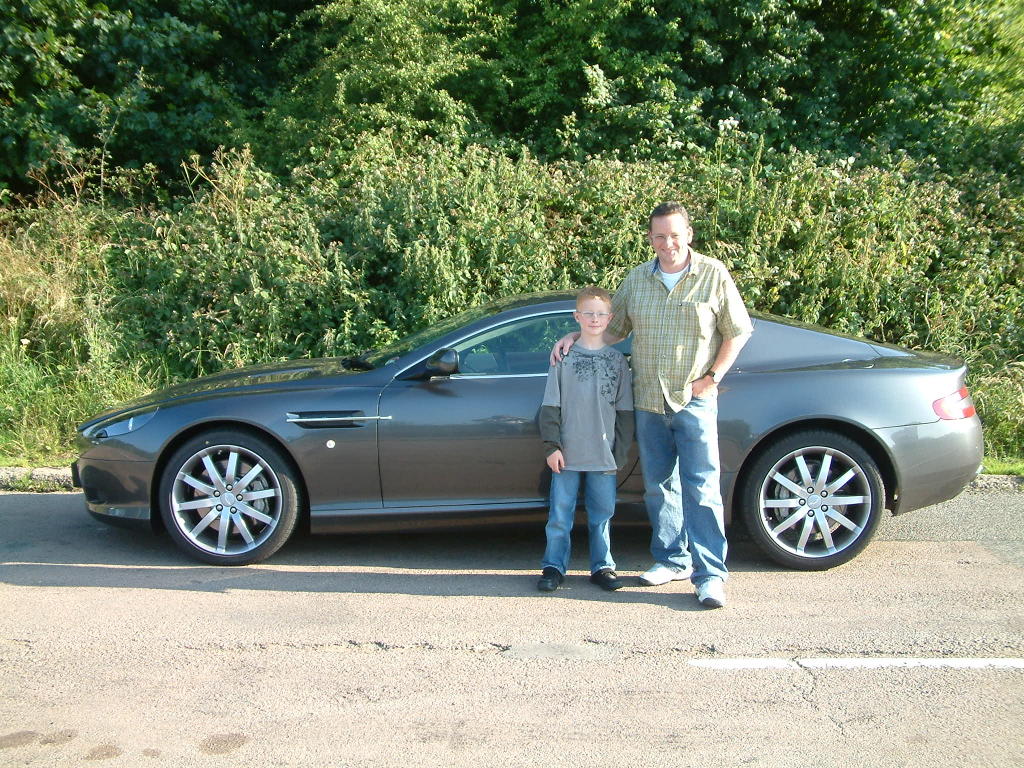
Being a media wannabe occasionally has its advantages. The other week The Independent asked me to roadtest a car. That in itself would be good. When I heard the car was an Aston Martin DB9, it was great.

I may be 41, but I was like a grinning 12 year old for the afternoon when Rory (my 9 year old co-tester) and I got behind the wheel of this feat of engineering excellence.

Did I like it? Well, you'll have to read the Indy's motoring supplement to find out.

The right questions v the right process

I've recently been doing some work around employee surveying - engagement surveying seems to be the term of the moment - and it has been a revelation seeing why and how organisations survey their employees.

The spectrum has run from an organisation's communication team that actively manipulates focus groups so that the results they come out with matches their expectation when they went into the room; to several organisations who have been asking the same questions for five or more years, despite huge changes to their organisation, to one company where the process of collecting and tracking information is all important - and they don't really do a whole lot with it between each annual event.

And that's what has got me thinking: how many organisations treat their EOS as an annual event rather than an integrated aspect of their people process. How many actually do the pre-work to identify potential drivers of employee engagement and then build their surveys year-on-year around that? How many really follow through on the actions using PDPs, team goals and the organisation's business strategy to deliver changes to/for/with their people? And how many complete the loop by saying what they've done, and then carrying the learnings into the next round of surveying? And how many are now moving their surveying on from an annual event to six monthly or even 90 day checks?

Some clearly are - luckily I've been able to work with a couple who are really making use of the stats to inform their people strategy and have made the links from organisational objectives right through to PDPs. However for others, I'm still seeing the holy grail of the upward employee satisfaction curve as all important. But if you're not asking the right questions in the first place, how useful is that?

Thursday, July 14, 2005

Proud to be a Londoner

I'm a Londoner and immenseley proud of my city. Yesterday as I walked across the Millennium bridge, having travelled on the Tube for the first time since the bombs, my passion for the city of my birth was reborn. Decked out in its summer splendour, the panorama north, south, east and west from the Thames was stunning.

But London is about much more than great views. It's a city based on many faiths, many cultures, many talents and many strengths. I've just watched the scenes from the capital as Londoners took to the streets for two minutes of remembrance for all those who were callously killed last week; for those who remain and for all of us Londoners who are far far stronger than any fundamentalist of any creed or colour.

Strong, united, defiant.

Monday, June 20, 2005

The best work

My partner and I pick up two kinds of work - direct to us and via agencies/consultancies. and somehow, the stuff we win directly has always turned out to be more successful.

It seems that the work that comes through third parties almost always has something hidden or strings attached. It doesn't necessarily make the work less satisfying, but over the past few years I'm probably into double figures on projects where I've had one scenario described to me only to find something different when I've met the client face-to-face.

I've recently picked up a contact with a financial services business via a third party. Ostensibly the project is to kick-start their vision and values communications. But a week in, it's clear that their V&V doesn't actually square with their culture and that more comms would be no more useful than polishing a turd.

It's likely - if they're brave enough - that we could be in on the ground floor of a very significant change programme. I think the client has known this all along, yet still went out to an agency to find a person or small business willing to support a comms need that's not really there - yet.

Effective communication isn't a panacea and some of the work specifiers and agencies are mixing comms with change when looking for solutions. I'm very happy to unpick the differences, but it too often leads frustrating false starts for both sides.

Monday, June 13, 2005

Do people have to fit into processes - or vice versa?

I've got a sore throat. I've had it for a week, and it isn't getting any better. But up to today, I haven't been near a doctor's surgery for about six years.

As you can see, we're building towards a connection. That connection comes from the fact that today I did walk into my doctor's surgery - and into a mis-communication loop that led to both me and the person I was attempting to book an appointment with to be less than satisfied with the exchange.

Now here's the situation. I moved into the area around 10 months ago, and my wife registered me with my new doctor. And that was it: until today.

So I walked through the door and up to the desk of an empty surgery. That's empty other than the two receptionists sat behind the desk busying themselves with their papers. I smiled. One briefly raised her eyes from her papers and then carried on what she was doing. It was a good 30-45 seconds before she acknowledged my presence. That put me on edge a bit.

"Hello," I said, "I'd like to make an appointment to see a doctor, I'm registered with Dr. xxxx."

"Is it an emergency?" the receptionist replied. "I don't know, I said. That's why I'd like to see a doctor." "Well, is it an emergency or can it wait?" she replied, immediately sweeping back round the loop from which no good could emerge.

"I don't know," I said again. "I haven't been to a doctor's for six years, and it's bothering me sufficiently to come down here now."

"Well I can only book you in if it's an emergency, " she continued, and I'm pretty sure she folded her arms at that point.

"Mrs. Txxxxx," I countered. "I'm not medically qualified and unless you are, I don't think we can come to that diagnosis - and anyway, I don't want to be talking about my symptoms out here. When can I get to see a doctor?"

"If you think it's an emergency, I can book you in to see Dr. Jxxxx at 6pm, after surgery's finished."

She said it in such a condescending manner that I was minded to stick a large medical dictionary up her nose. But at that moment I saw a sign behind the counter. It read: 'Since we introduced our new booking procedure, most patients have welcomed the new process. Some, however, have been extremely rude to our staff. This is not helpful and could necessitate us removing you from your doctor's lists.'

Now no-one has actually explained to me what the booking procedure was, but a light was going on that I probably wasn't fitting into their procedure. So I asked to see the Practice Manager.

Mrs T got on the phone: "Have you got time to see Mark Shanahan?" (no mister for me!). "He's unhappy with the booking procedure."

Frankly, I wasn't unhappy with the booking procedure. I was unhappy with the 'customer service' I'd received when trying to make my first ever booking at the surgery.

So I trucked upstairs to see Mrs. P. I retold her my experience and she explained that the booking procedure was to phone in and make an appointment on the day you feel ill - and that all today's scheduled appointments were full. After that, it was emergencies only and that they didn't take bookings for future days. Also, they were two doctors down and generally short staffed in terms of medical care.

It was an enlightening 10 minute visit to the surgery that could have taken less than two.
The lesson I took out was that Mrs. T and I got into the wrong communication loop through her expecting me to know the system, and through me expecting to be treated as an individual, not a component in a process.

Public servants like Mrs. T need to remember that they're dealing with individuals: people with different levels of need and understanding. Assuming knowledge is a dangerous thing - but can be overcome very easily by asking just a couple of establishing questions first. And the first question should never be....."Is it an emergency?"

Thursday, June 09, 2005

Where do Values come from?

I'm on my third Values project of recent times and all have a commonality: the Values have originated/been imposed from the top of the organisation.

As a consequence, they're aspirational, a little airy-fairy and not really in keeping with the way the business operates.

All three companies are ruthless drivers of profits with dividend-hungry investors looking to gain the maximum return possible. Consequently the 'managers' leading each organisation are targeted on - and measured on - short-term profit.

Yet the values espoused by each company are around valuing colleagues; being customer-led and being recognised for their community responsibility.

If companies choose to act hard nosed, why don't they EVER accept that this attitude is truly what they do value?

Who are they kidding?

Thursday, May 19, 2005

Is blogging getting corporate?

Not sure how I feel about IBM having a set of guidelines for bloggers IBM and those participating in wikis. On the one hand it makes good corporate sense makes personal views and free speech just a little more corporately - controlled. I guess it's an inevitable step, but I hope it doesn't put IBMers off making useful, challenging and informed comment to the world about their working life.

I'm interested in seeing how other organisations follow suit - anyone got any other good examples out there?

Sunday, May 15, 2005

Busy when I should be blogging

It's typical. when I'm working on communicatons, I'm generally too busy to blog - but of course that's the time I should be blogging, because that's the time when I'm at the heart of what's going on in organisational communications.

If I step back at the moment and look at the work I'm involved in, it's quite wide-ranging, but so little is now involved in conventional print media. In fact, precisely one project putting together entries for a grad scheme directory.

As for the rest, it's a mix of strategy building, internal comms training, e-zines and web writing (and e-zines linked to inter/intranets).

I'm having fewer conventional meetings too, with many more teleconferences and web chats. My working day, my working timeframe and my working links are all changing - and it's good to see that it's much the same for my peers.

I took part in a fun and useful webchat with CiB this week covering its merger with the ICA and plans to get closer to other organisations including IABC. I hope these plans come to fruition - as I could do with saving on the subscriptions.

Such chats are becoming commonplace now - good when we know the participants already, but I have my reservations when breaking new ground with new people. We don't want to become a race or profession of geeks - and I've yet to meet a webchat that enables me to see the whites of my fellow chatters' eyes.....

Thursday, May 05, 2005

Who's using the tools?

The blogs are out there - but how many organisations are making use of blogs, never mind podcasts and other new media to engage their internal audiences?

How many are lifting the quality of their intranets by introducing RSS feeds of what's new, what's news and what's just plain interesting to know?

How many wikis have escaped from the IT departments to provide a useful means for project collaboration - how many, if any, people are using such tools to create their own internal communications?

As ever, I suspect the technology is ahead of the market - at least from my UK perspective. Also, I supect the marcoms guys are going to grab these new tools rather faster and more readily than their organisational comms counterparts. But what an opportunity we have to use new technology to help engage with our colleagues.

We just need some brave souls to take the plunge, sort out the legalities and get up and running.

Wednesday, May 04, 2005

How far to push

Recently I interviewed a selection of business people for a case study. The case study was around innovation, following the conception to delivery of a new product. The guys who were charged with making the product were very proud of what they'd done, managing volatile liquids; building plant from scratch; widening their knowledge into a related but unfamiliar area - well out of their usual scope of operation. The product had been delivered to spec and on time.

The marketing people were less pleased. The production costs were well above what had been forecast and the speed of delivery was some way short of expectations. For them, the product had made it to the market - but by the skin of its teeth.

So I went back to my client: "It's a great case study," I said. "But it's not that straight upward line to success. If we're to really share what you've learned from the experience, this will need to be warts and all. People have been very honest talking to me, and my text will reflect that."

"No problem." said the client. So I produced the case study, and circulated it for sign-off. The changes began to filter back. Suddenly the issues weren't so bad; the costs were massaged and the trenchant opinions were pared down. I argued the toss where black had turned white - and the compromise was shades of grey. But in the end the agreed text was pretty anodyne.

It may have satisfied those directly involved in the project, but was far less immediately useful for those who would have benefited from knowing the perils and pitfalls of bringing something completely new to world to the market.

So what did I do? I fed back my views honestly but in a tempered logical way. And then I took the money.

I'm looking forward to writing more case studies for this client. I hope I can inch them towards greater openness. But in the end, they will make the decision on how 'honest' they are prepared to be.

I can take the horses to water - but I can't make them walk on it.